

The End of an Era
The SEC's dominance of college football, led by Alabama and Nick Saban, is over

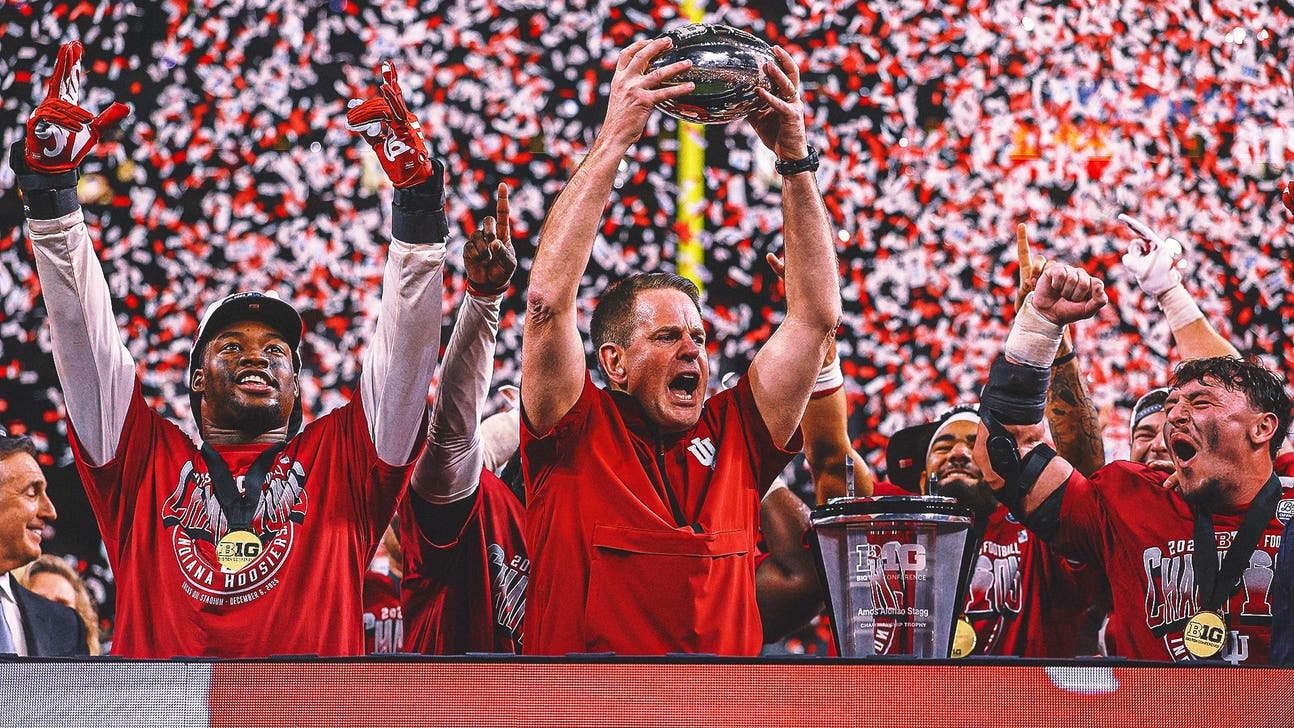
With Indiana’s 27-21 win over Miami last night, the Nick Saban and SEC Era of Dominance in college football is officially over.
The cracks had been showing.
Maybe it was two years ago, when Saban retired following a loss 27-20 overtime loss to Michigan, the eventual champion, in the College Football Playoff semifinal at the Rose Bowl.
The cracks appeared deeper last season, when an SEC team failed to qualify for the CFP national championship game for the second year in a row.
Then in this year’s CFP, Ole Miss’s Lucas Carneiro’s 47-yard field goal split the uprights, culminating in the Rebels’ eventual 39-34 victory in the quarterfinal game at the Sugar Bowl on January 1st.
The loser of that game was Georgia, whose head coach, Kirby Smart, had been on Nick Saban’s coaching staff at Alabama from 2007-15, before taking over the Bulldogs and leading them to two consecutive (2021-22) national championships.
Meanwhile, Alabama was embarrassed by Indiana 38-3 in its CFP quarterfinal in this year’s Rose Bowl.
Indiana’s head coach, Curt Cignetti, previously coached at Alabama under Saban.
That was before deciding at the age of 50 to venture out on his own, first to Indiana University of Pennsylvania, then Elon, then to James Madison, before taking over in Bloomington last season and where he’s compiled a 26-2 record, including a Big Ten championship and two CFP appearances, which included the Hoosier’s first bowl victory since 1991, first-ever Rose Bowl win, and now first national championship in college football.
Before Cignetti, Indiana was a basketball school. Or to be honest, a basketball state.
Then there was New Year’s Eve, where Ohio State lost to a revitalized Miami squad in the Cotton Bowl. The Buckeyes, the defending national champs, lost its second game in a row, this time to the hyper-physical (and violent) Hurricanes, who were playing in the school’s biggest game since the 2003 National Championship game, a loss to Ohio State.
The losses by Alabama, Georgia and Ohio State in this year’s CFP signaled a change in the ongoing transformation of the college football landscape.
Just a few years ago, schools like Indiana would have never been able to compete in the Big Ten, let alone on the national stage.
But with the introduction of Name, Image, and Likeness (NIL) and cooperatives led by deep-pocketed alumni (Indiana has Mark Cuban) it has changed how schools can compose their teams.
And quickly!
The Cignetti Plan
It’s how Cignetti can move players like chess pieces from his previous school (JMU), and with a keen eye for talent evaluation (ex. Heisman Trophy winner Fernando Mendoza was a transfer from California), he can remake a program that has the most losses in college football history into the top program in the country.
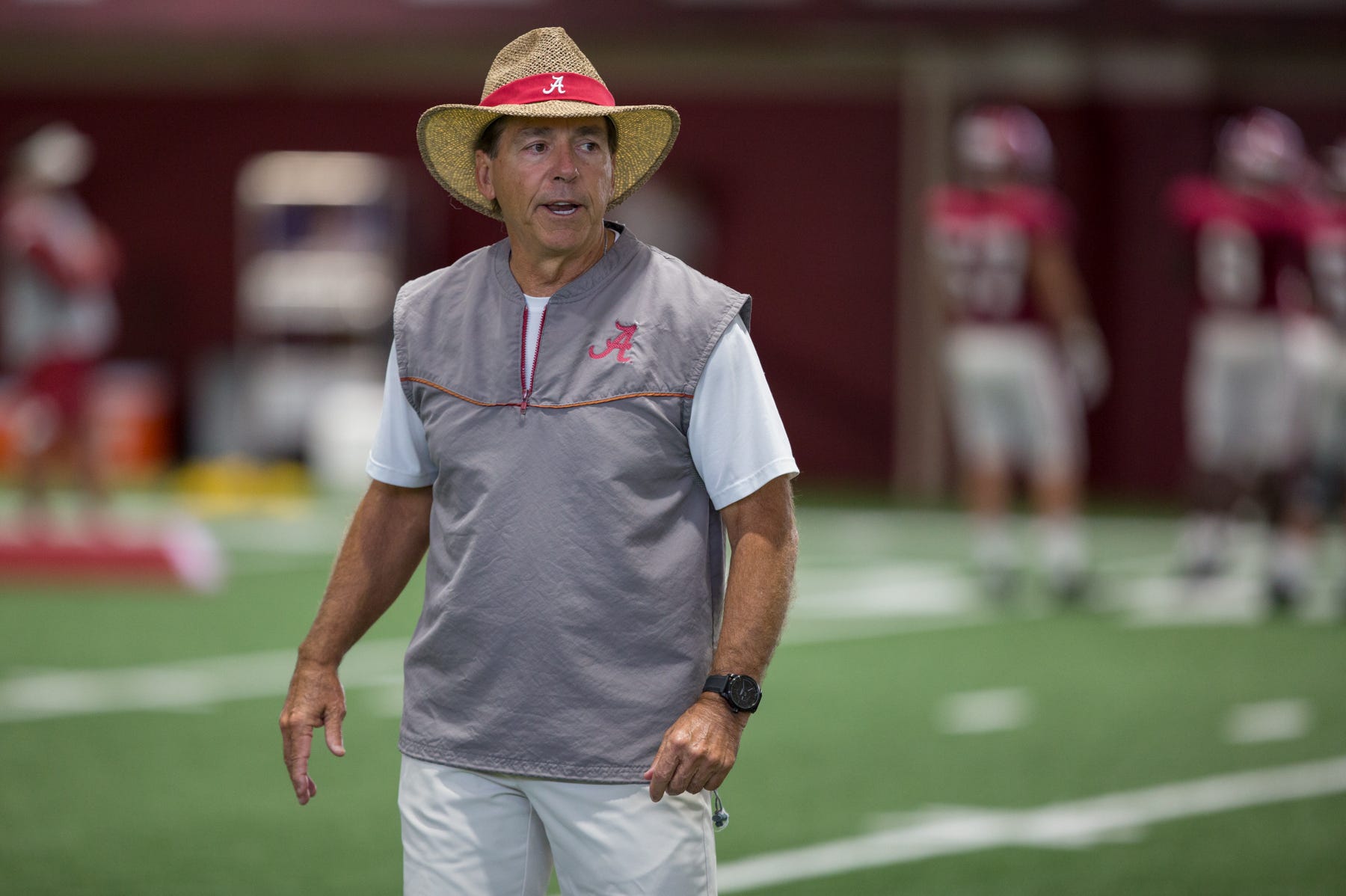
Saban saw the writing on the locker room walls. It’s what led to his decision to hang up his safari hat and walk away two years ago.
Recruiting players is no longer a one-time exercise targeting high school players. It’s now an every day exercise; each practice an opportunity to recruit, or at least retain the talent you’ve assembled, but always knowing there’s another suitor, with more money, lurking behind the next goal post.
What’s happened at Alabama, the premier college football program this century before Saban decided to spend his Saturdays with Pat McAfee, is telling.
Last season, Alabama lost regular season games to proverbial SEC doormat Vanderbilt, led by transfer quarterback Diego Pavia, traditional rival Tennessee, then led by NIL-bonus baby Nico Iamaleava1, and SEC conference newcomer Oklahoma (they transferred themselves from the Big XII), and failed to reach the CFP. They even lost to Michigan (again) in the ReliaQuest Bowl.
Bama started this season with a 31-17 loss to Florida State, a team that had won only two games the previous season. It also included two more losses, another loss to Oklahoma, this time at home, and a loss in the SEC conference championship to Georgia.
Then it walked into the Rose Bowl and faced Cignetti’s Hoosier team, which many said reminded them of a Saban-coached team.
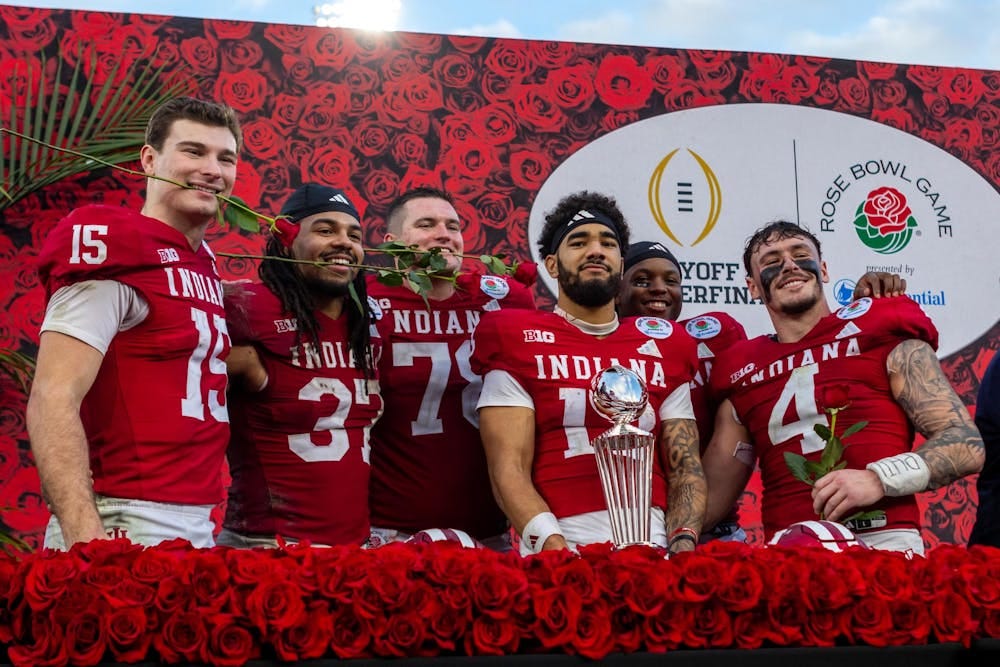
Disciplined. Smart. Tough.
Indiana removed any luster from Alabama that might have remained, and that included head coach Kalen DeBoer, who replaced Saban and might be the most despised person in the state right now.
The Crimson Tide brand does not hold the stature it once did, and will likely never again.
Personally, I suspect many schools, especially SEC schools, were giving players “benefits” for decades.
Cam Newton’s time as a Heisman Trophy winning quarterback at Auburn in 2010, just brought it to light.
It is likely the reason why schools in the SEC dominated the sport, winning 16 national championships since 2003, and which was done mainly through the recruitment of high school players.
That “advantage” has now been eliminated, and we are seeing the results.
A New Landscape
Every school can now pay its players. Players are free to roam, from school to school, and without penalty,2 thanks to relaxed transfer rules, which used to hamstring players by requiring them to sit-out a year upon transferring.3
The SEC has not won a national championship since the 2022 season. Alabama hasn’t won a national championship since the 2020 COVID mired season.
Now, each season and each team is an entirely new creation. Preseason polls be damned!
There will be no more legacies of championship teams, with players that beget another, such as Penn State’s Linebacker U, or more recently, Tight End U.
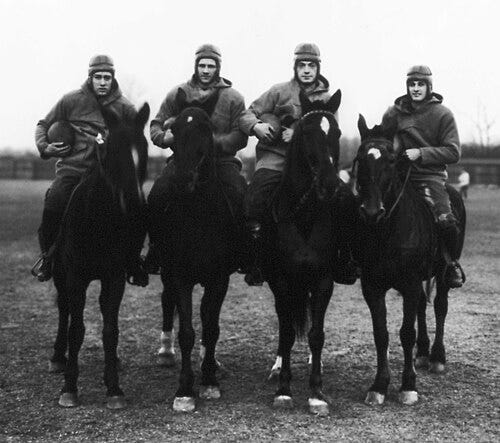
Alabama’s fabled stable of running backs, beginning with Mark Ingram in 2009, and included Trent Richardson, Eddie Lacey, and Derrick Henry, will feel more like Grantland Rice’s Four Horsemen than recent history.
If you need any further proof of the end of the SEC’s Era of Domination, just look at this year’s bowl games, where the SEC posted a 4-9 record, with two of those wins coming against other SEC schools — Bama defeated Oklahoma in the CFP First Round while Ole Miss defeated Georgia in the CFP quarterfinal.
Questions about the legitimacy of SEC programs, in particular due to Missouri and Tennessee, with neither defeating a team with a winning record this season, all while being ranked in the AP Top 25, give what some anti-SEC proponents argue is an unfair advantage to other SEC schools earning wins against those “ranked” opponents.
By the way, and maybe not surprising, but both Missouri and Tennessee lost their bowl games.
Despite Saban’s retirement, his impact is still felt widely throughout college football outside Saturday mornings on the ESPN’s “College GameDay,” including this year’s College Football Playoff.
All four semifinal teams were led by former Saban assistants. Oregon’s Dan Lanning is a former Saban defensive assistant; Miami’s Mario Cristobal is a former offensive line coach; and Ole Miss’ Pete Golding is a former Alabama defensive coordinator.
Cignetti, a long-time Saban assistant, continues that Saban connection.
Indiana, however, was the third straight Big Ten school to win the national championship, proving the odds of future national championship teams being connected to the SEC, a different story.
Nico Iamaleava would eventually transfer to UCLA for the 2025 season.
Two cases involving Washington quarterback Demond Williams and Duke quarterback Darian Mensah, may have or may still face legal actions from their schools.
A reported 4,500 players entered the Transfer Portal on January 2nd, 2026, the day the portal opened.